
We need attractions to be environmentally ethical, and we crave time to forge deeper connections with the places we give our valuable time to.
Cape Town Big 6: Why It’s Perfect for Eco-Friendly Sustainable Travel in 2026
2026 sees a shift towards slower, more purposeful travel.
We need attractions to be environmentally ethical, and we crave time to forge deeper connections with the places we give our valuable time to.
Way back in 2012, Cape Town Big 6 committed to the Responsible Tourism Charter, and their efforts and initiatives are ongoing.
So, dump the selfies.
Don’t just see Cape Town, feel it.
And while you are doing that, respect the Cape Town Big 6 ethos of “leave no trace”.

Check Sunrise Times and Arrive Early
Don’t put yourself on a time trial. Let each place dictate the amount of time you spend there. You are only done when you are ready to leave.
Planning Makes the Day
A quick visit to the website will reveal what you can do and see beyond the iconic Insta pics.
Practice Nature Based Wellness
Keen to power walk, hike, trail run, meditate or do some yoga?
Cape Town Big 6 has some epic spots for you, so listen up.
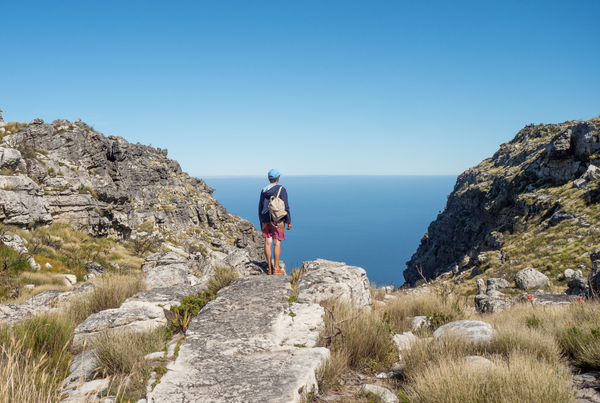
If you are fit (it’s recommended to take a qualified mountain guide), you can hike either up or down from the top of the mountain. If that is too much, get to the top via the cable car, admire the views, then move away from the shops and terrace area.
The summit has over 70 km of trails. Walk the 6 km round trip to the highest point of the mountain, Maclear’s Beacon, at 1,086 meters. Find all five dams
(Woodhead, Hely-Hutchinson, Alexandra, Victoria, and De Villiers) on the top; this can be an 8-16 km route.
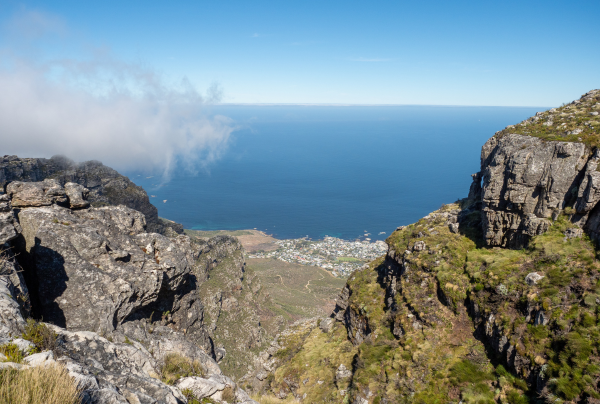
From the upper cable station, head towards MaClears Beacon, where the Smuts Track joins and follows fire paths towards the Twelve Apostles cliffs, with stunning ocean views. The further you move away from the main tourist areas, the quieter it gets, so it’s easy to find a tranquil place to meditate or be in the space without intrusion.
Maps are available at the main reception of Kirstenbosch Botanical Garden. Run or walk the 7 km Silvertree Trail, or the 3 km Yellowwood Trail through a forest to a waterfall. Power walk up the steep, wide paths to the Cycads, explore and follow the stream uphill, find one of the many grassy spots or shaded forest areas and do some yoga.
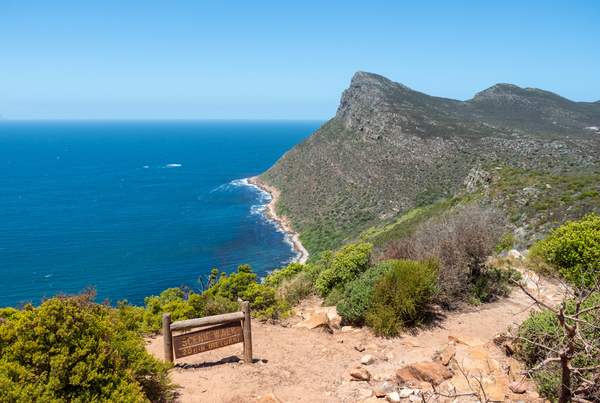
Cape Point is huge, making it easy to find solitude. Drive the 80km of roads to find baboons, eland, ostriches and zebra. Swim in one of the two tidal pools. Hike the Shipwreck Trail or get your heart pumping on the walk down to Dias Beach, or via the rocky Lightkeepers Trail. Skip the Funicular and climb the steps to the old lighthouse for outstanding views.
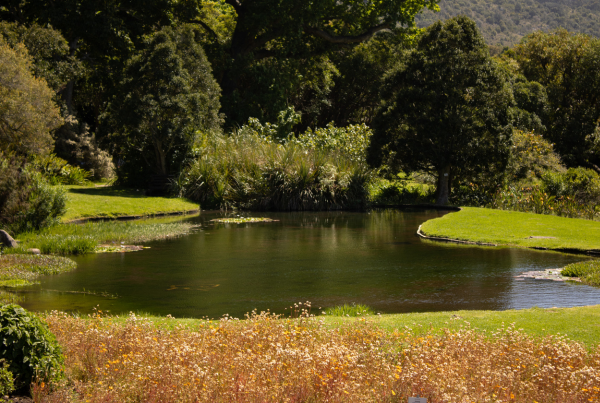
Groot Constantia is on the lower slopes of Table Mountain, and a full walk around the estate will take about two hours. Head uphill to find the historic stone swimming bath and walk through the vineyards down to the dam.
Take your Time to Understand the Heritage
The interactive exhibition “Origins of Early Southern Sapiens” at the Buffelsfontein Visitor Centre at Cape Point is world class, and the Manor House and museum exhibits at Groot Constantia take you on a journey back in time.
Robben Island provides spaces for quiet reflection. Clearly visible from this stark island is Cape Town, framed by Table Mountain. Imagine the mental torture and painful, daily reminder of what is so close, yet so unattainable.
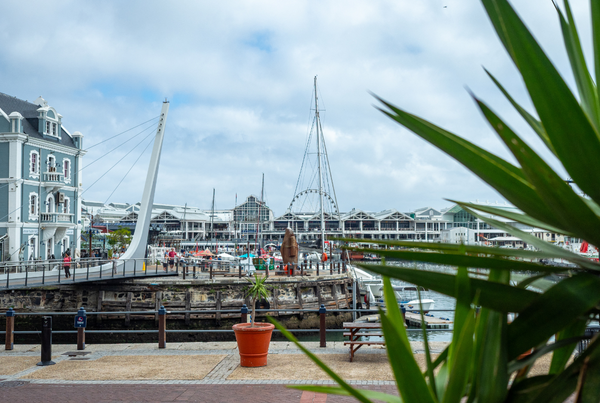
Beyond the shops, the V&A Waterfront has a rich history. Guided tours daily at 11h00 and 14h00 depart from Chavonnes Battery Museum, or you can follow a self-guided path that covers 22 landmarks, using plaques and info boards. A free GPS audio tour runs 45–60 minutes, starting at the Cape Town Sign (V&A Hotel) and ending at Zeitz MOCAA, with narrated history via app.
A Quick Lowdown on Sustainable Initiatives by Cape Town Big 6
Retail therapy is part of travel, even at nature based attractions. The gift shops at all the Big 6 attractions are committed to stocking 80% or more locally produced merchandise.
Cape Point – the Flying Dutchman Funicular uses a magnetic drive system, using 50% less electricity, and produces zero noise or air pollution. The reserve protects fynbos biodiversity through invasive species control and habitat restoration. It safeguards endangered bontebok and Cape mountain zebra via protected habitats and patrols, and baboon troops are monitored to prevent human-wildlife conflict while allowing natural foraging.
Groot Constantia is a WWF Conservation Champion. Solar panels power roofs, and artificial wetlands treat cellar wastewater. Cellar waste becomes on-site compost for organic fertilisation. Nature heals itself, pest control is done by pheromone insect traps, ladybirds against mealybugs, owl houses to control rodents, and baboon management via Human-Wildlife Solutions. Vineyards are cover-cropped and mulched for soil health. Invasive plants are removed, and erosion is reduced by stormwater management.
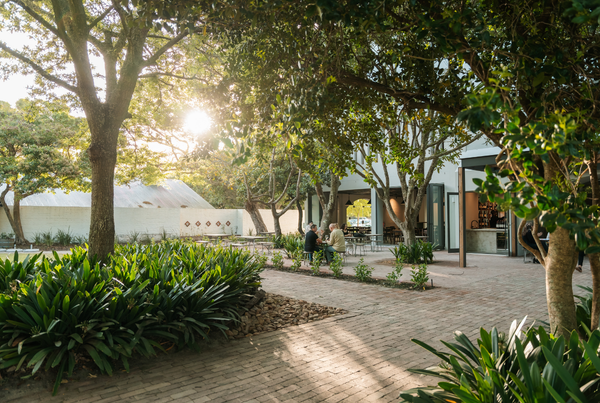
Kirstenbosch National Botanical Garden is part of the UNESCO World Heritage Cape Floral Kingdom. It practices robust indigenous biodiversity, water conservation, and waste reduction. The Garden uses natural Table Mountain water with computer-controlled irrigation, waterless urinals and low-flow fixtures.

Robben Island Museum is a UNESCO World Heritage Site, mandated to preserve natural and cultural heritage. Most of the island is powered by a solar photovoltaic mini-grid. Coastal cleanups and indigenous tree planting are ongoing.
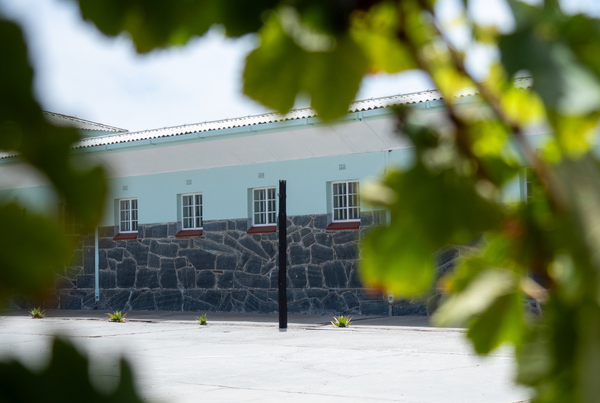
Table Mountain Aerial Cableway has restrooms where all the fast facts are displayed on the door. It is carbon neutral. Waterless urinals, the use of boreholes, and a dedicated waste-sorting team. Food waste is converted to compost. They use LED lighting, geyser timers, insulation blankets, and smart climate controls to reduce consumption. The cable cars generate 1,500 kWh monthly during descent, feeding power back to the grid.
V&A Waterfront is one of Africa’s greenest precincts, and the energy-efficient initiatives include the use of solar panels, natural light, seawater for cooling air conditioning, grey water for irrigation, 62,000 square meters of mostly drought-resistant, indigenous greenery, and a robust waste-to-energy pyrolysis plant will be activated very soon.
I know it’s a tough choice, but list your order of preference for visiting the Cape Town Big 6.
Mine is:
- Table Mountain Aerial Cableway
- Cape Point
- Kirstenbosch
- Groot Constantia
- V&A Waterfront
- Robben Island
Visit www.ctbig6.co.za for detailed sustainability and other useful info, and to book your next visit.
About the Author
Di Brown is a Cape Town–based freelance travel writer with over 20 years of experience in the tourism industry. Passionate about responsible travel, she is a strong advocate for ethical, sustainable tourism and animal welfare. When she’s not writing, Di can often be found capturing the beauty of her surroundings through her lens as a keen photographer.
Share your top Cape Town Big 6 moments with us!
Connect with us via our Cape Town Big 6 Facebook or Twitter page. Better yet, tag us on Instagram of your favourite outdoor moment and tag @CapeTownBig6 #CapeTownBig6
ONE DESTINATION, SIX UNFORGETTABLE EXPERIENCES
There is no one way to explore all of the Cape Town Big 6, and much of what makes each of them so special is the variety of things to see and do at each. So if possible, take your time to explore each of the city’s most visited tourist attractions in as much depth as possible – as any local will tell you, you can spend a lifetime at each of the Big 6 and still not tire of them. Find the 3 and 4 day itineraries and tips here.